 JewelMatch Hub
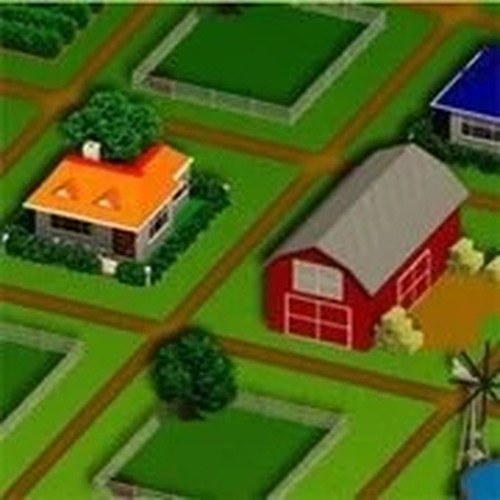
Rural Route Logic Challenge stands out for its calm, focused puzzle design. The core mechanic of rotating road tiles to connect buildings is simple to learn but offers satisfying depth as layouts grow more complex. The bright, cheerful farm theme avoids any distracting elements, keeping the player's attention on the task. Without timers or scoring, the game encourages a relaxed pace, making it ideal for unwinding after a busy day. Regular play can subtly improve spatial reasoning and planning skills. While it may not appeal to those seeking fast-paced action, it delivers exactly what it promises: a peaceful, engaging mental workout for all ages.
At its heart, this game asks players to connect scattered farm structures using movable road segments. Each tile can be rotated with a simple tap or click, altering the direction of the path it contains. The objective is to form an uninterrupted route that touches every building on the screen. This straightforward premise hides a surprising depth, as even small changes in tile orientation can have large effects on the overall layout. Success depends on careful observation and methodical thinking rather than speed or reflexes.
Players navigate through multiple farm community layouts, each presenting a distinct arrangement of buildings and road pieces. Early puzzles feature fewer structures and simpler connections, allowing newcomers to grasp the basic logic. Later layouts introduce more complex patterns, requiring greater attention to detail and more steps to complete. The gradual increase in complexity ensures that the experience remains engaging without becoming overwhelming. Each solved puzzle provides a sense of accomplishment, encouraging players to tackle the next challenge.
The game adopts a bright, cheerful aesthetic with colorful farm scenes that feel inviting and calm. Buildings such as barns, silos, and houses are depicted in a friendly, cartoon-like style. The road tiles are clearly marked, making it easy to see which directions they can connect. This visual clarity supports the puzzle-solving process, as players can quickly assess the state of the board. The overall presentation avoids any harsh or distracting elements, contributing to a relaxed gaming experience.
Designed for a broad audience, this game requires no prior puzzle experience or specialized knowledge. The controls are intuitive, and the lack of timers or scoring systems removes any pressure. Players can experiment freely, trying different tile rotations without penalty. This makes it suitable for young children developing logical thinking skills, as well as older adults seeking a gentle mental exercise. The game can be played in short sessions during a commute or longer periods at home, adapting to the player's schedule.
While the game is relaxing, it still rewards strategic planning. One effective method is to first identify buildings that appear isolated, as they often dictate the orientation of nearby tiles. Another approach is to work from the edges of the layout inward, gradually narrowing down possible configurations. The game does not penalize mistakes, so players are free to test hypotheses and learn from unsuccessful attempts. Over time, regular play can sharpen spatial reasoning and pattern recognition skills, which are useful in many everyday situations.










Player Comments
Sign in to comment
You must be logged in before posting a review or rating.
No account? Create one
No comments yet. Be the first to comment!